<b>Anti-nutritional factors and protein apparent digestibility coefficients of soybeans sources to pacu (<em>Piaractus mesopotamicus</em>)</b> - doi: 10.4025/actascianimsci.v32i3.5819
Keywords:
Hemmaglutinin, trypsin inhibitor, soybean process, tannin
Abstract
This study aimed to determine the activities of trypsin inhibitors, hemagglutinant and tannin levels in soybean meal and in raw and processed soy, as well evaluate the protein apparent digestibility coefficient for pacu juveniles. The apparent coefficients of raw, extruded, toasted and milled soy were determined using chromium oxide (0.5%) as marker. A reference diet was created with 26% crude protein and 4,352 kcal kg-1, with each feed containing 30% of the test diet. Feces were collected by abdominal pressure. All analyzed products presented anti-nutritional factors, but the lowest trypsin inhibitor activity was observed in soybean meal. Soy that received thermal treatment presented better digestibility coefficients and lower hemagglutinating activity values than raw soy. No effects of trypsin and tannin inhibitor were observed on the protein digestibility coefficient, but a negative relationship was observed between hemagglutinin levels and protein digestibility coefficient. The use of soybean meal and extruded or toasted soy is recommended for pacu feeding.Downloads
Download data is not yet available.
Published
2010-09-02
How to Cite
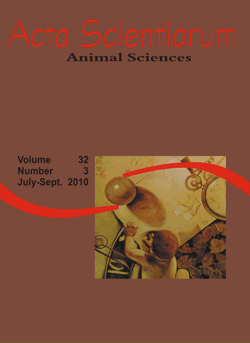
Stech, M. R., Carneiro, D. J., & Carvalho, M. R. B. de. (2010). <b>Anti-nutritional factors and protein apparent digestibility coefficients of soybeans sources to pacu (<em>Piaractus mesopotamicus</em>)</b> - doi: 10.4025/actascianimsci.v32i3.5819. Acta Scientiarum. Animal Sciences, 32(3), 255-262. https://doi.org/10.4025/actascianimsci.v32i3.5819
Issue
Section
Nonruminant Nutrition
DECLARATION OF ORIGINALITY AND COPYRIGHTS
- I Declare that current article is original and has not been submitted for publication, in part or in whole, to any other national or international journal.
The copyrights belong exclusively to the authors. Published content is licensed under Creative Commons Attribution 4.0 (CC BY 4.0) guidelines, which allows sharing (copy and distribution of the material in any medium or format) and adaptation (remix, transform, and build upon the material) for any purpose, even commercially, under the terms of attribution.
Read this link for further information on how to use CC BY 4.0 properly.


0.9
2019CiteScore
29th percentile
Powered by