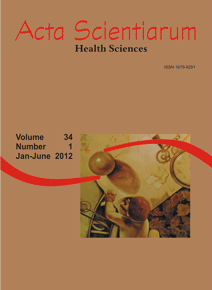
<b>Epidemiological profile of the mother-infant dyads hospitalized in obstetric rooming of a university hospital for treatment of neonatal hyperbilirubinemia</b> - doi: 10.4025/actascihealthsci.v34i1.8942
Abstract
Neonatal hyperbilirubinemia, clinically identified by jaundice, is characterized by a yellow skin color and mucous membranes. Normal treatment consists of phototherapy which, combined with postpartum emotions and concerns, may cause conflicts and mother’s resistance to treatment. Hospitalization period may therefore be prolonged. The epidemiological profile of mothers and newborn infant undergoing phototherapy in obstetric twin-room is identified. Analysis comprises a quantitative, exploratory and descriptive study comprising the collection of data collection by a structured questionnaire and by retrieval of clinical records. Data analysis was used for descriptive non-probabilistic statistics. Data highlighted the individual, social, obstetric and others characteristics related to the newborn. Current research showed that variables such as mothers’ age bracket, schooling, predominance of white skin color, mother's occupation, family income, blood group, complications during pregnancy, labor or delivery, drugs used during labor and birth, sex of the newborn, newborn’s blood group and exclusively breastfeeding nutrition were the main predictive factors of jaundice in newborns in the obstetric twin-room under analysis.
Downloads
DECLARATION OF ORIGINALITY AND COPYRIGHTS
I Declare that current article is original and has not been submitted for publication, in part or in whole, to any other national or international journal.
The copyrights belong exclusively to the authors. Published content is licensed under Creative Commons Attribution 4.0 (CC BY 4.0) guidelines, which allows sharing (copy and distribution of the material in any medium or format) and adaptation (remix, transform, and build upon the material) for any purpose, even commercially, under the terms of attribution.
Read this link for further information on how to use CC BY 4.0 properly.











5.png)